"Should we build an AI agent?" is one of the first questions we hear. It is the wrong place to start. Agents are the exciting part of AI right now, but plenty of work is done better, faster and more cheaply by a simple automation. And some work an automation will never manage.
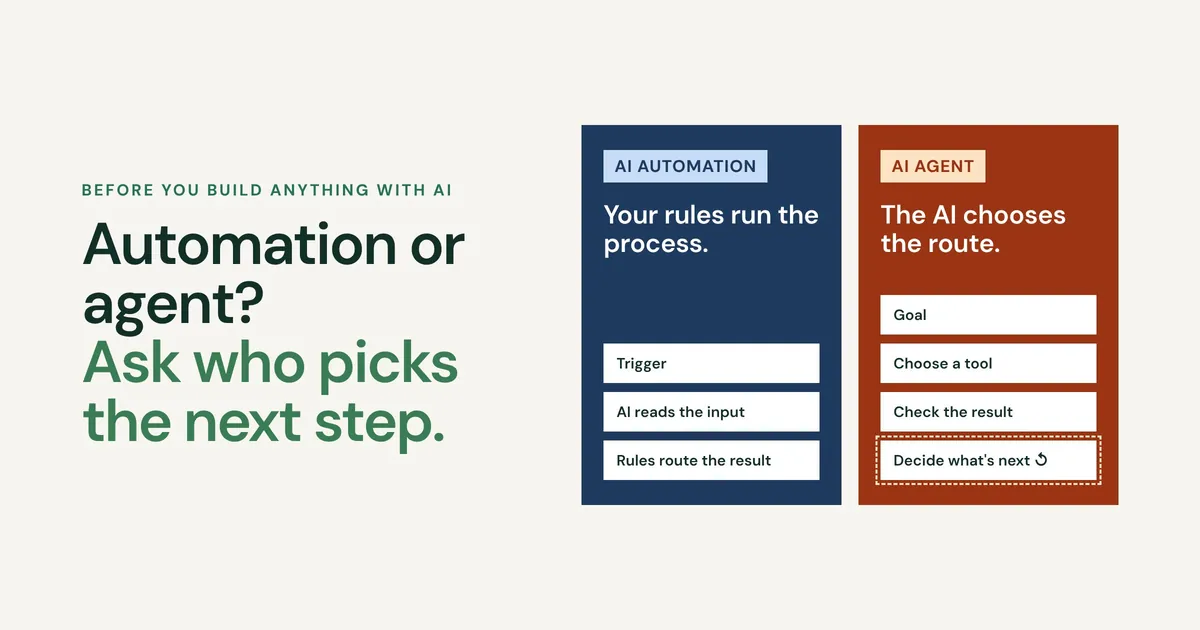
There is one question that sorts it out: who picks the next step? In an automation, your rules decide. In an agent, the AI decides, inside limits you set.

AI automation: your rules run the process
AI does one job inside a workflow you have already mapped. It reads, tags or summarises, then your rules move the work on. Trigger, AI reads the input, rules route the result.
- Best for: high-volume, repeatable work your team already knows how to do.
- Use it when: you can write the steps, and the common exceptions, down in advance.
- Ask before you build: what starts it? Which rule sends it where? Where do unclear cases land?
Your team gets: the same result every time, at volume.
AI agent: the AI chooses the route
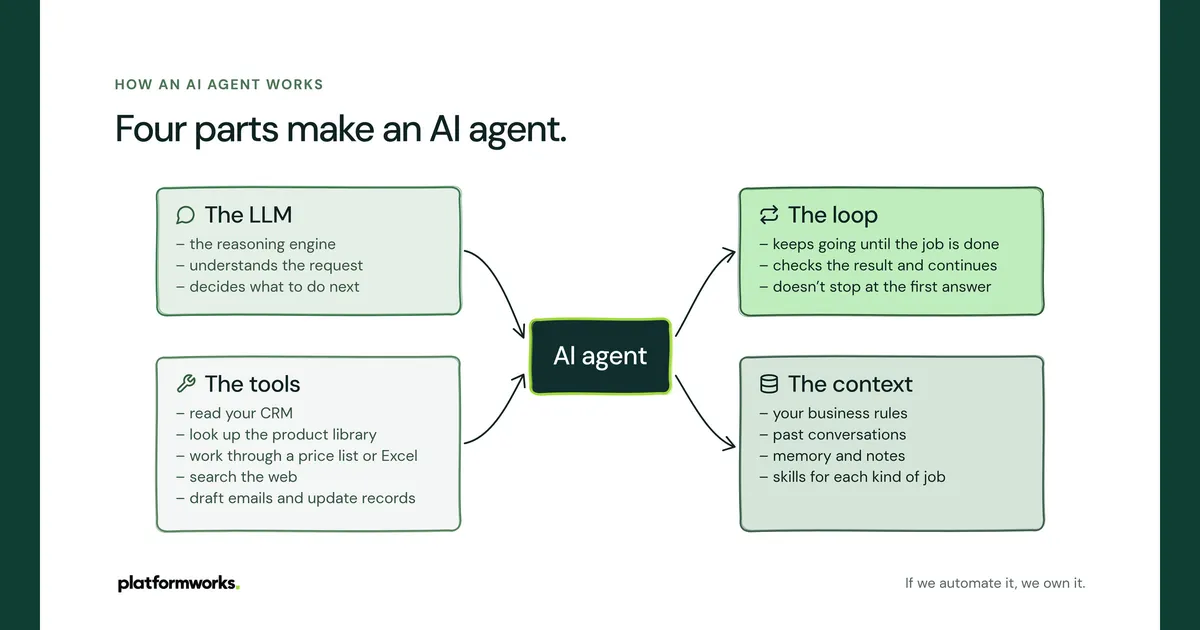
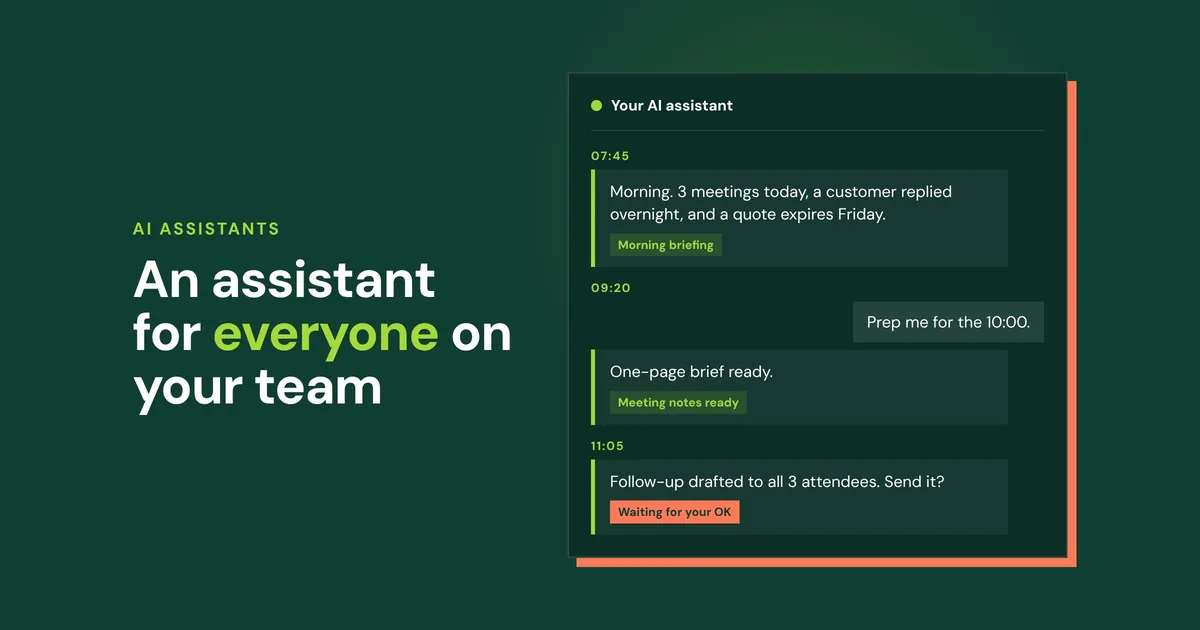
The AI works towards a goal you set. It picks its next action from the tools and permissions you give it, checks the result, and decides what to do next until the job is done or a person needs to step in.
- Best for: exceptions, research across several systems, and work where the next check depends on the last.
- Use it when: you know what good looks like, but the path changes case by case.
- Ask before you build: which tools can it use? What can it do alone? When does a person take over?
Your team gets: judgement work handled, and people kept for the calls that matter.
Same enquiry, two approaches
Can you quote for 40 users across our two sites?
The automation tags it as a quote request and scores it against your ideal customer profile. A rule assigns it to the right rep in the CRM. Fast, consistent, and the rep still does the thinking.
The agent checks the CRM history and open deals, researches both sites and drafts a tailored reply. It books the call, or hands it to the account owner if a deal is already live. The rep arrives at a conversation that is already half done.
Neither is wrong. The right one depends on how many enquiries you get, how different they are, and what a slow or generic reply costs you. That is exactly what our Inbox and Service agent and Lead Generation agent are built around.
Most good systems use both
- Automation runs the routine path.
- An agent picks up the exceptions.
- A person signs off what matters.
The mistake we see most is building an agent for work a rule could do, or forcing rules onto work that is mostly exceptions. Getting the split right is what makes the difference between a system people trust and one they work around.
Try it on one of your own processes
Pick a process that eats your team's time, such as enquiries, orders, invoices, support tickets or reporting, and ask:
- Could someone write the steps down on one page?
- How many times a week does it happen?
- What share of cases don't follow the usual steps, and who handles those now?
- How many systems does someone check to do it properly?
- What does a mistake, or a slow answer, cost you?
Mostly clear steps and high volume points to automation. Lots of exceptions and lots of checking points to an agent. A bit of both, and you probably want both.
Bring us one process
In a free 30-minute call, tell us about one process that is slowing your team down. We will tell you honestly whether it needs an automation, an agent or both, what it would connect to, where a person should sign off, and what we would build first. If the answer is "you don't need AI for this", we will say so.
Start with one job. Prove it. Then widen it. And once it is running, we look after it: if we automate it, we own it.